
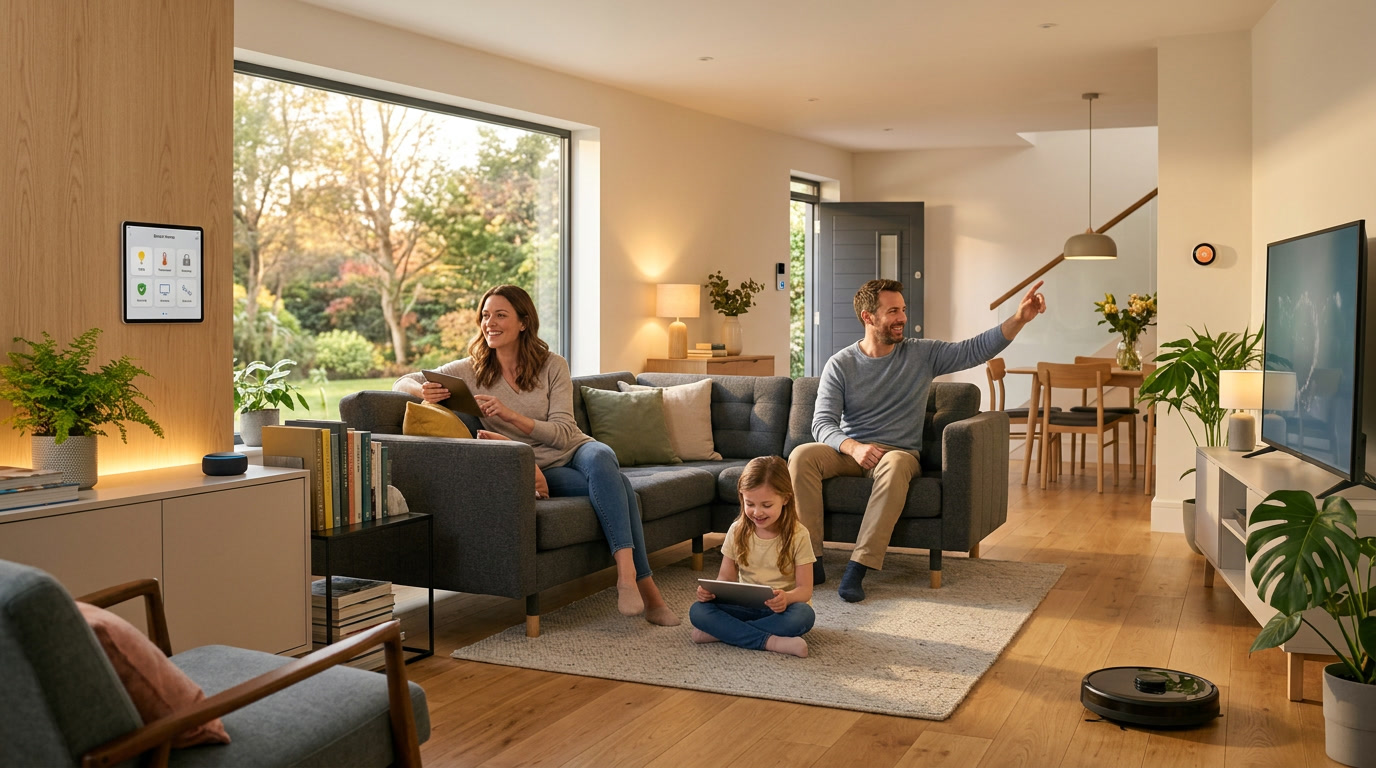
Comfort, safety, and independence used to require constant manual effort — checking locks before bed, adjusting the thermostat by hand, walking through the house to switch off lights. Today, a well-planned smart home solution handles nearly all of that automatically, quietly working in the background so homeowners can focus on living instead of managing their house. This guide walks through every major building block of a modern smart home solution, how to choose the right pieces for your household, and how to sidestep the most common mistakes people make along the way.
Why Accessibility Is One of the Most Underrated Benefits
Before diving into devices and categories, it is worth highlighting one of the most meaningful — yet most overlooked — advantages of home automation: accessibility. For elderly family members or individuals living with mobility challenges, a voice-controlled environment can be transformative. Being able to adjust lighting, lock a door, or contact a family member without getting up or straining to reach a switch is not a luxury for these households — it is a genuine improvement in daily independence and quality of life. Any conversation about the value of a smart home solution should start here, because this is where the technology delivers some of its most tangible, human benefits.
The Core Building Blocks of a Complete Smart Home Solution
A truly effective smart home solution is not a single gadget — it is a combination of interconnected categories working together. Understanding each piece helps homeowners make informed, intentional decisions instead of buying at random.
Smart Lighting Systems
Smart lighting lets homeowners adjust brightness, color temperature, and scheduling through a mobile app or a simple voice command. Many modern systems also support motion-based automation, so lights turn on or off automatically as people move between rooms. This delivers everyday convenience while also trimming unnecessary electricity use, since lights are no longer left running in empty spaces.
Smart Thermostats
A smart thermostat studies household routines over time and adjusts heating and cooling accordingly, rather than following a rigid, unchanging schedule. Beyond the comfort improvement, this category plays one of the largest roles in reducing overall energy waste, since the system naturally avoids conditioning a home that nobody is currently occupying.
Smart Security and Surveillance
This category includes video-and-audio doorbells, indoor and outdoor cameras, motion detectors, and app-controlled locks. Together, these tools give homeowners real-time alerts and remote visibility into their property’s security status from virtually anywhere, turning a smartphone into a live window on the front porch, the driveway, or the back entrance.
Voice Assistants and Central Hubs
Voice assistants function as the command center of a smart home solution, letting a household control multiple devices through a single spoken instruction rather than opening several separate apps. A central hub takes this a step further, allowing products from different manufacturers to communicate with one another so the entire setup behaves like one connected system instead of a scattered collection of gadgets.
Smart Appliances
Modern refrigerators, ovens, washing machines, and robotic vacuums can now be monitored and controlled remotely, often running more efficiently than their traditional counterparts. While not every “smart” feature on a major appliance is essential, remote monitoring and usage alerts genuinely add convenience for busy households.
Smart Plugs and Outlets
Smart plugs remain one of the most affordable and approachable entry points into home automation. By instantly converting an ordinary lamp, fan, or appliance into an app-controlled device, they let curious homeowners experiment with automation on a small scale before committing to a larger, more expensive system.
How to Choose the Right Smart Home Solution for Your Household
With so many products competing for attention, choosing the right smart home solution can feel overwhelming at first. A few practical steps make the process far more manageable.
Define your priorities first. Decide whether your main goal is security, energy efficiency, convenience, accessibility, or some combination of all four. Clarifying this early narrows down which categories deserve the largest share of your budget.
Consider compatibility before every purchase. Not every device works seamlessly with every other ecosystem. Checking whether a product supports a shared, widely adopted platform ensures your entire setup can function as one coordinated system rather than a pile of isolated gadgets that never quite communicate with each other.
Start small and expand gradually. Rather than overhauling an entire home in one weekend, the most successful setups typically begin with one or two devices — a smart thermostat or a video doorbell, for example — and expand into a fully integrated system over time as confidence and familiarity grow.
Factor in long-term costs, not just the price tag. Some devices carry a higher upfront cost but deliver real savings through reduced energy consumption, and certain insurers even offer discounts for homes with verified, professionally recognized security systems. Looking at total cost over several years paints a more accurate financial picture than the sticker price alone.
Prioritize data privacy and security from day one. Because connected devices collect and transmit household data, choosing reputable brands with clear privacy policies and a consistent history of security updates is essential for protecting personal information over the long run.
Common Challenges and How to Work Through Them
Even with all these advantages, some homeowners remain hesitant to adopt a smart home solution. Understanding the most common concerns helps set realistic, grounded expectations.
Technical complexity. Initial setup can feel intimidating for anyone who does not consider themselves especially tech-savvy. Fortunately, most modern systems are now designed with straightforward apps and clear, step-by-step installation guides that make the process far less daunting than it once was.
Internet dependency. Because most connected devices rely on a stable internet connection, investing in dependable home Wi-Fi infrastructure is an important — and often underestimated — part of building a reliable system. A weak or overloaded network is one of the most frequent causes of frustrating performance issues.
Upfront investment. While prices have dropped considerably over the past several years, assembling a comprehensive setup still requires thoughtful budgeting. Starting with the highest-impact devices and expanding gradually helps manage costs without sacrificing the overall goal.
Practical Tips for a Smoother Setup Experience
A few extra habits can make the difference between a smart home solution that gets used daily and one that gets abandoned after a few frustrating weeks.
Label and organize devices by room rather than by device type, since this makes voice commands and automations far more intuitive for every member of the household, not just the person who set everything up.
Keep firmware and app software updated on a regular basis. Skipping updates is one of the most common ways security vulnerabilities creep into an otherwise well-planned system.
Test new automations in isolation before layering additional rules on top of them. Building complexity gradually makes it far easier to identify the source of a problem if something does not behave as expected.
Keep a simple manual fallback in place for critical functions, such as physical light switches or a spare key, so daily life is not disrupted if a device temporarily loses connection or power.
Real-World Scenarios: How Different Households Benefit
It helps to see how these categories translate into everyday life for different types of households.
A young family with small children. For parents, a smart home solution often centers on safety and convenience rather than novelty. Video doorbells let a parent see who is at the door without waking a napping toddler. Smart plugs can automatically shut off appliances left running, and motion-triggered nightlights guide sleepy midnight trips down the hallway without anyone fumbling for a switch in the dark.
A remote or hybrid worker. Someone spending most of their day at home tends to value climate control and energy monitoring the most. A thermostat that quietly adjusts room by room throughout the workday, paired with smart plugs that track how much electricity a home office setup consumes, can noticeably lower monthly utility costs without requiring any daily effort.
A household supporting an aging parent. Here, the priorities shift almost entirely toward accessibility and peace of mind. Voice-activated lighting, video check-ins, and simple sensor-based alerts that notify family members of unusual inactivity can allow an older relative to remain safely independent at home far longer than would otherwise be possible.
A renter in an apartment. Renters often assume home automation is out of reach because they cannot install permanent wiring, but a surprising amount of a smart home solution can be built using battery-powered sensors, plug-in smart outlets, and portable cameras that require no drilling or rewiring, all of which travel easily to the next apartment when a lease ends.
Recognizing which of these scenarios most closely matches your own household is often the fastest way to figure out where to focus your first purchases.
Setting Realistic Expectations From the Start
One final piece of advice matters more than any single device recommendation: approach a smart home solution as an ongoing project, not a one-time purchase. Technology in this space continues to improve every year, standards continue to mature, and household needs naturally shift over time as children grow, routines change, or family members age. Building in flexibility from the beginning — favoring open standards, avoiding unnecessary long-term contracts, and expanding gradually rather than all at once — keeps the system adaptable instead of locking a household into decisions made in a single afternoon of shopping.
The Future of Smart Home Solutions
The smart home industry continues to evolve at a rapid pace, with artificial intelligence playing an increasingly central role in how these systems operate. Future systems are expected to become even more predictive, learning household routines with greater precision and making proactive adjustments with little to no manual input required.
Interoperability standards are also continuing to improve, meaning devices from different manufacturers will work together more smoothly than ever before. This trend makes it substantially easier for homeowners across the United States to build a customized smart home solution without being permanently locked into a single company’s ecosystem.
Sustainability is also shaping the next generation of smart homes, with growing attention to solar integration, intelligent water-usage monitoring, and systems specifically designed to reduce environmental impact while still maximizing everyday comfort. As these features become more mainstream and more affordable, the line between a “smart home” and simply “a well-run home” is likely to keep narrowing.
Final Thoughts
A smart home solution is no longer a futuristic concept reserved for early adopters and tech enthusiasts — it has become a practical, accessible way for everyday homeowners to improve comfort, strengthen security, and reduce unnecessary energy waste. By understanding the core components, clarifying personal priorities, and taking a thoughtful, gradual approach to expansion, virtually anyone can transform an ordinary house into a smarter, more responsive living space.
Whether the motivation is cutting energy costs, protecting family members, supporting an aging relative’s independence, or simply enjoying the convenience of a connected lifestyle, investing in the right smart home solution can make a meaningful, lasting difference in daily life for years to come.